
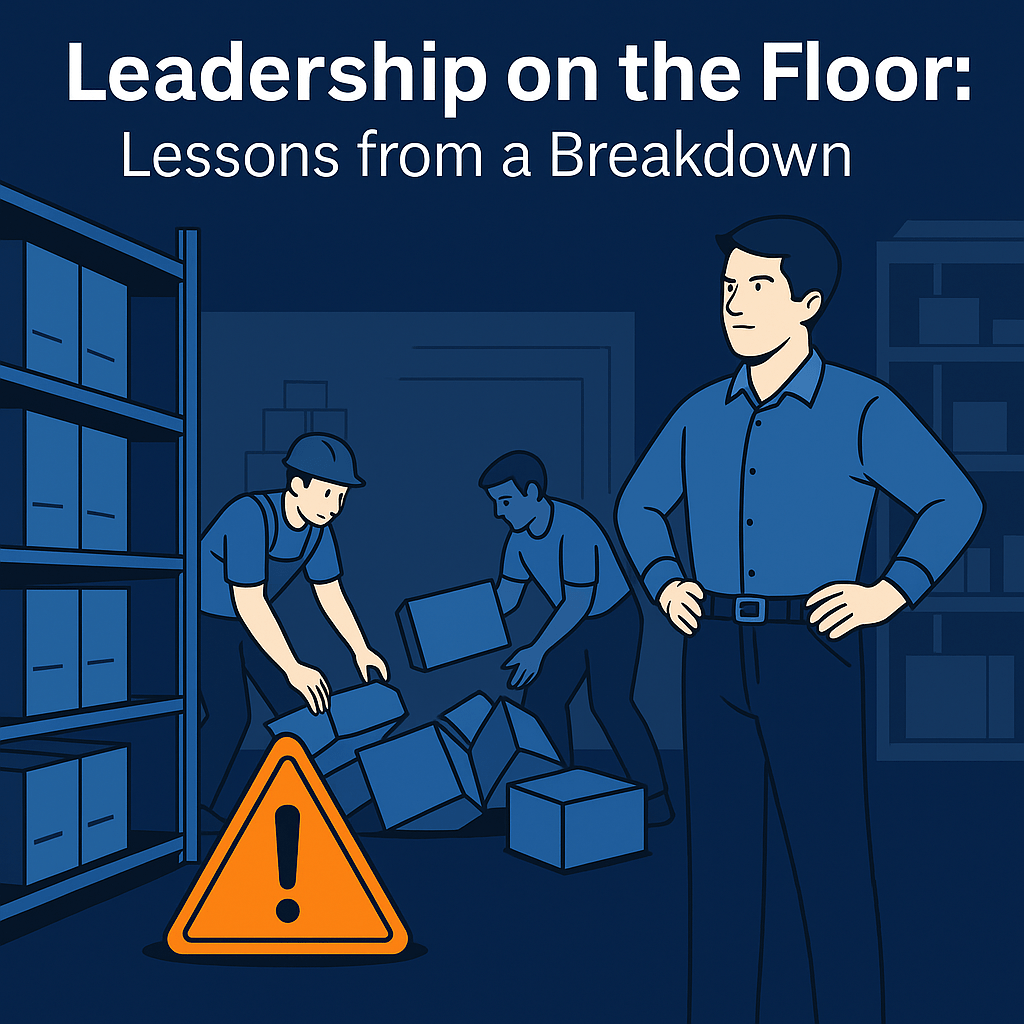
A few days ago, we had a challenging moment in our warehouse. A disfigured pallet during transport broke during offloading and damaged some boxes. On top of that, there were a couple of other issues with the same delivery that caused stress and frustration among the team.
The situation required calmness, clarity, and coordination. But what stood out to me most was how it was handled.
Our manager gave some brief instructions and returned to the office. Later, he gathered the team for a quick catch-up, acknowledged the challenges, and delivered a motivational pep talk… but didn’t offer a clear plan or support to help navigate the disruption. While motivation has its place, in a moment like this, what the team needed most was hands-on guidance and presence.
🔎 It reminded me of a key concept from “The New One Minute Manager” by Ken Blanchard and Spencer Johnson. The book introduces the Situational Leadership II (SLII) model, which outlines four developmental levels of team members:
1️⃣ Directing: When someone is new to a task and needs step-by-step guidance.
2️⃣ Coaching: When someone is gaining competence but still needs support and explanation.
3️⃣ Supporting: When someone is capable but lacks confidence or motivation.
4️⃣ Delegating: When someone is experienced and can perform independently.
💡 Now here’s the important bit: even experienced team members who are usually in the Delegating stage can momentarily fall back to Supporting or even Coaching stages when something goes wrong.
That’s what I observed. Although our warehouse team had handled deliveries like this many times before, this particular disruption pulled them back. It was no longer business as usual. It was a moment that required real-time leadership, coaching, and support on the ground.
I thought I would have stayed on the floor, not just during offloading, but through the resolution, prioritising this moment above my usual routine. It’s not about micromanaging. It’s about being there when your team needs to see you with them in the chaos.
🗝️ Key takeaway:
❇️ Leadership isn’t static. It adapts to the moment. Recognise when your high-performing team needs you to shift gears and re-engage at a different level of support.
👥 What would you have done in this situation? Have you ever seen a moment where a manager’s presence made all the difference?
 rezamogharab.com
Leave a comment